

A criminal case usually involves far more work before trial than most people realize. Long before anyone enters a courtroom for opening statements, a criminal defense lawyer may be reviewing reports, checking evidence, talking through possible outcomes, preparing motions, and looking for weaknesses in the prosecution’s case. At J. MacGyver Law, we help clients in Sarasota and surrounding Florida communities understand what is happening behind the scenes so they are not left wondering what their attorney is doing between court dates.
Key Takeaways
- Most criminal defense work happens pretrial. Analysis of evidence, discovery issues, and agencies involved in representing clients can happen so early into representation. Oftentimes even before trial.
- Discovery is when the defense gets access to evidence that prosecutors have. Depending on the case, that could include documents such as reports and witness information; recordings, photographs, test results, and other physical evidence.
- This is against the backdrop that legal rules do not end with a jury trial. However, through pretrial work, attorneys can identify weaknesses in the case or legal issues that may result in a particular type of resolution.
- That involves preparing for trial, which usually takes place long before anyone knows if there will ever be a trial. Accumulating this knowledge in advance allows the defense to understand evidence and respond as problems flare up.
What Happens After an Attorney Takes Your Case?
One of the first jobs is getting a clear picture of what happened.
That starts with the client.
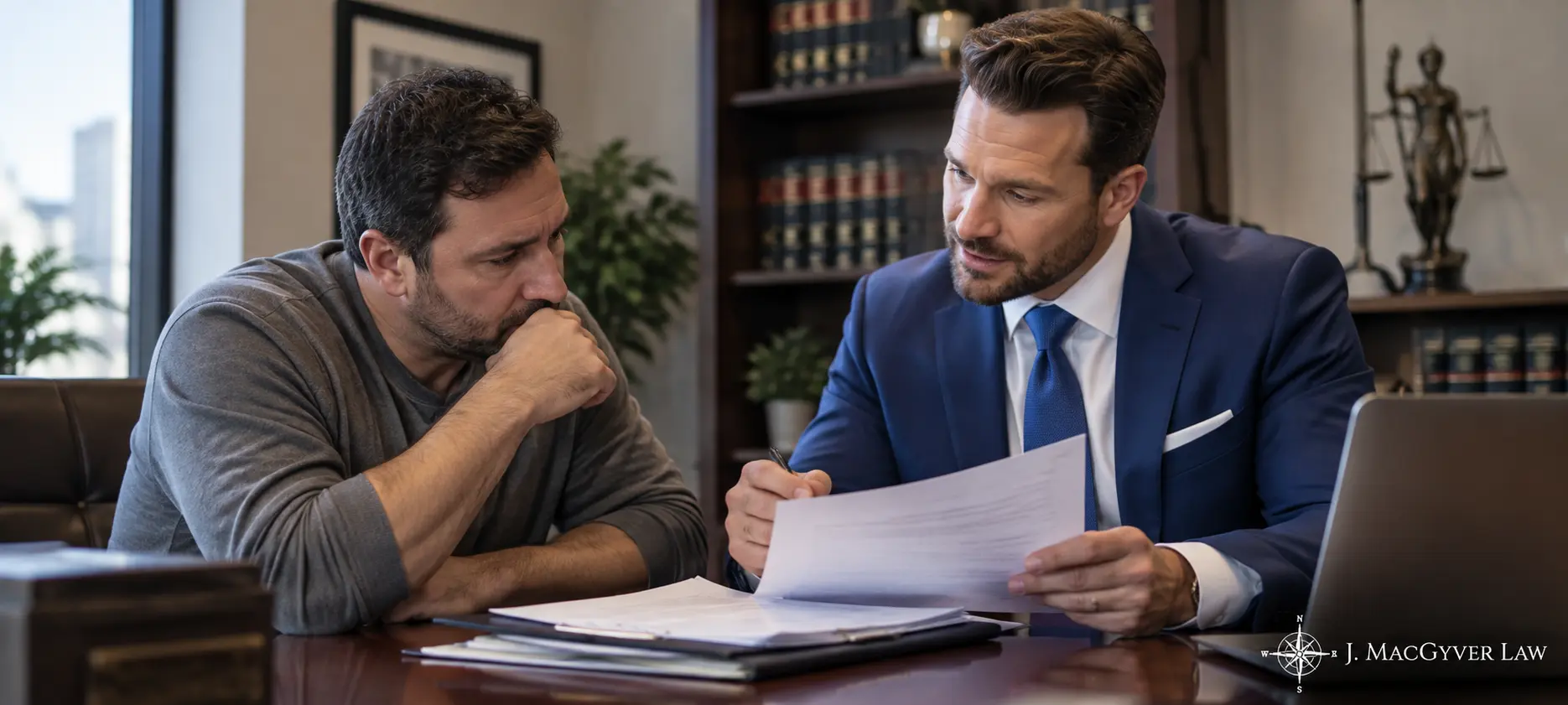
An attorney will usually want to hear the events in your own words rather than relying entirely on what appears in a police report. Small details can matter, and the version written by law enforcement may not include everything you remember about the encounter.
From there, the attorney may look at:
- The specific charges filed
- Police or incident reports
- Arrest documents
- Upcoming hearing dates
- Bond or release conditions
- Your prior record, when relevant
- Evidence already available
- Issues that may require immediate attention
The goal at this point is not to jump to conclusions about how the case will end. It is to understand what is known, what is missing, and what needs a closer look.
How Does a Lawyer Review the Evidence Against You?
Evidence can appear different when its components are considered collectively rather than separately.
A criminal defense lawyer might review police reports alongside body-cam footage, witness statements, photographs, test results, surveillance video recordings or other available resources.
That comparison matters.
For example, a written report may describe an encounter one way while video supplies additional context. Two witnesses may disagree about when something happened. A test result may raise questions about how a sample was collected or handled.
Under Florida’s criminal procedure rules, discovery provides a formal process for exchanging certain information before trial. The exact materials and procedures depend on the case and the applicable discovery rules.
The point is not simply to collect a large file of documents. The attorney needs to understand what those documents actually show.
Can Witnesses Be Questioned Before Trial?
In some Florida criminal cases, depositions may be part of the discovery process.
A deposition allows certain witnesses to answer questions under oath before trial. Florida’s criminal procedure rules distinguish among different categories of witnesses, and whether a particular witness may be deposed can depend on that classification and the circumstances of the case.
Depositions can help the defense learn more about what a witness claims to have seen, heard, or done.
They may also reveal issues that were not obvious from a written statement.
That does not mean every witness will be deposed in every case. The rules and strategy vary. An attorney has to decide which information is likely to matter and how best to obtain it.
What Legal Problems Might Be Found Before Trial?
Sometimes the most important issue in a criminal case is not whether an event happened exactly as alleged. It may be how the evidence was obtained or whether a particular procedure was legally proper.
Depending on the facts, an attorney may examine questions involving:
- The reason for a traffic stop
- A search of a person, vehicle, home, or property
- Statements made during questioning
- Identification procedures
- Collection or handling of physical evidence
- Testing procedures
- Whether particular evidence can be used in court
If there is a legal basis to challenge something, the issue may be raised through an appropriate pretrial motion.
This is one reason defense work can be difficult to judge from the number of court appearances alone. A short hearing may represent hours of reviewing records, researching an issue, comparing evidence, or preparing an argument beforehand.
Does Your Attorney Talk With the Prosecutor Before Trial?
Often, yes.
Much of the time, communications between the defense and prosecution are typical in criminal cases. An attorney can then go over discovery, scheduling, issues of law, and potential resolutions with a prosecutor.
Such conversations do not by themselves mean that a defendant is going to plead guilty.
The strength of the evidence, potential defenses, charges involved, and possible consequences to them all need to be weighed with regard to what makes sense for that client right now.
Jesse MacGyver Morse, having practiced for three years as a prosecutor in Pinellas County, offers another view on that process at J. He worked on everything from DUI cases up through homicide prosecutions and more during that time.
Our experience on the prosecution side gives us real-world knowledge of how criminal charges might be analyzed and what needs to be done for a thorough investigation.
Why Prepare for Trial If the Case Might Settle?
Because waiting until the last minute can put the defense at a disadvantage.
A criminal defense lawyer may begin preparing with trial in mind even when several possible outcomes remain open. Witnesses may need to be evaluated. Exhibits may need to be organized. Legal issues may need research. The defense also needs to know where the prosecution’s evidence is strong and where questions remain.
Preparation can help with decisions outside the courtroom too.
It is difficult to evaluate a possible resolution intelligently without knowing what the evidence looks like. A client needs enough information to understand the trade-offs between continuing to litigate the case and considering another available option.
No attorney can know the final outcome of a case simply by looking at the charge on day one. The facts have to be examined first.
What Should You Be Doing While Your Attorney Prepares?
Clients have a role in preparation too.
You can help by:
- Keeping your attorney updated with accurate contact information
- Saving paperwork related to your arrest or court appearances
- Following all bond and release conditions
- Showing up for scheduled court dates
- Providing requested documents or information promptly
- Telling your attorney about facts that may affect the case
- Asking questions when you do not understand something
Do not assume a detail is unimportant simply because it seems small.
Your attorney would generally rather know about a potential problem early than discover it shortly before a hearing or trial.
Preparation Starts Long Before the Trial Date
A courtroom trial may be the most visible part of a criminal case, but it is rarely where the defense begins.
At J. MacGyver Law, we see more than just the charge itself! When analyzing evidence, assessing the state case, and prepping for what lies ahead, Jesse MacGyver Morse works directly with clients while also leaning on his experience as a former prosecutor. The company also serves clients in Pinellas, Hillsborough, Manatee, Sarasota, and Charlotte counties.
Discuss your charges, the evidence against you, and what can be prepared before trial with a Florida criminal defense lawyer at J. MacGyver Law. Contact us to get started with a Free Initial Consultation.
Request a Lawyer’s CallbackFrequently Asked Questions
Q: Does every criminal case in Florida go to trial?
A: No. Criminal cases can end in different ways depending on the facts, evidence, legal issues, decisions by the prosecution, and choices made by the defendant after receiving legal advice.
Q: What is discovery in a criminal case?
A: Discovery is the process through which certain information and evidence are exchanged before trial under Florida’s criminal procedure rules. What must be disclosed and when can depend on the circumstances and applicable rules.
Q: Can an attorney challenge evidence before the trial begins?
A: Potentially. If there is a valid legal basis to challenge particular evidence or the way it was obtained, an attorney may raise the issue before trial through an appropriate motion.
Q: Should I meet with my lawyer before the trial?
A: Usually, yes. Your lawyer may have to talk through evidence with you, prepare for the hearing in advance of it possibly happening, review what might happen if the case goes to trial, or discuss strategies/scenarios.
Q: When does trial prep start?
A: It is possible to start the whole process well ahead of a trial date being established. From the early stages, preparing a case can include reviewing reports, examining evidence, identifying witnesses, and researching legal issues. Understanding the theory behind prosecuting (or defending) it.